A more reliable home was found, and I'm gradually putting up the shows on the server. I'm still using a very low quality for the podcast file, but I will gradually increase the quality until the host complains!
At the moment, only Show 01 (Trios), Show 02 (Songs), Shows 3, 8, 9, 10 (Concertos), 11 and 12 have been put up.
Archie

The companion website for the radio program that formerly aired Saturdays 8-10 PM! The program no longer airs, but these posts are a nearly complete record.
Thursday, September 25, 2014

Friday, September 19, 2014
Show 110: Concertos
[Added
on 2015/7/18: This used to be called Show 10. I've renumbered the
shows, so that this one is Show110. The July 4th show for this
year will be numbered numbered Show201, and so on. If you didn't figure
this out yet, my first show aired the week of July 4th, 2014.]
Part 1 (approx 1 hour) Part 2 (approx 1 hour)
Introduction
Concertos were how I got into classical music. I had started out by listening to Music Appreciation Records by Book Of The Month Club, back around 1962, when I was knee-high to a grasshopper's pet aphid, and got started listening to Beethoven's Fifth, and so on.
Concertos are works for solo instrument —or solo instruments— and orchestra. Usually there are three movements. We’ve already heard some slow movements from concertos; it’s time to listen to their first movements. The first movement of a concerto is sort of the signature movement; most people remember that first movement. We will also listen to some last movements, which are usually fast and exciting. I’m going to shorten these clips, especially in the longer movements.
 Bach: Brandenburg Concerto No 5
The first movement we’re going to listen to is one of the most highly recognizable movements in the Baroque repertoire. It is a triple concerto for flute, violin and harpsichord, and was one of the earliest concertos featuring the harpsichord as a solo instrument. In those times, i.e., roughly the time of Benjamin Franklin, the harpsichord was a sort of background instrument. When Bach used one as a solo instrument, people were startled, we’re told. Here’s the Brandenburg concerto No 5 in D major, the First Movement.
Telemann: Concerto for Flute and Recorder
The flute and Recorder are very similar instruments. Telemann, a composer who was very famous in his time, wrote a concerto for Flute and Recorder, which enables us to compare the two instruments side by side. This is Michala Petri and William Bennet performing Georg Philip Telemann’s Concerto for Flute and Recorder, with the Academy of St. Martin in the Fields. Try and see whether you can tell which is the recorder and which is the flute. The recorder sounds like a whistle.
Haydn: Concerto for Trumpet
One of the first performance I heard of the Williamsport Symphony was the Haydn trumpet concerto, played by the then maestro Rolf Smedvig, who was the solo trumpeter. Here’s the last movement, played by maestro Smedvig, with the Scottish Chamber Orchestra, conducted by Jahja Ling. The second movement is very memorable, and I urge you to take a listen to it, perhaps on the Internet.
 Mozart: Concerto No 23, K 488, Finale
Mozart was a child prodigy, and a fabulous pianist of that time. This is the ending of one of his most famous concertos, written shortly before he died, at a time when he was deeply depressed. There is absolutely no hint of his mental state in the music. He was a very amazing man.
This performance is by Chick Corea, and the orchestra is the St Paul Chamber Orch, conducted by, of all people, Bobby McFerrin. The performance is actually wonderful, crystal clear and well articulated.
Bobby McFerrin: Don’t Worry, Be Happy
Since we mentioned Bobby McFerrin, we have to play something from him which we all know well.
Beethoven: The Emperor Concerto
This is one of the most amazing last movements of any concerto: the finale of Beethoven’s Emperor Concerto. It is played by Leon Fleisher
Mendelssohn: Violin Concerto in E minor
Here’s a large chunk of the Mendelssohn violin concerto, whose slow movement I played in an earlier show on beautiful melodies. The Mendelssohn family was of Jewish heritage, though they had converted to Lutheranism, and we can hear some Jewish inspiration if we try really hard.
Tchaikovsky: Violin Concerto
We’ve already listened to the slow movement; this is the first movement played by Leila Josefowicz.
Brahms: Piano concerto No 2.
As we were saying, Brahms wrote these major, utterly romantic, symphonic concertos, and his piano concerto no. 2 is one of them. It was played some years ago in the Community Arts Center, by a famous South American pianist whose name I have forgotten. Here are about ten minutes of the first movement. The word romantic doesn’t even begin to describe it.
Mozart: Sinfonia Concertante
Mozart’s Sinfonia Concertante was written for violin and viola, and is considered one of his greatest works by many. It is in four movements, and this is a part of the slow movement.
Hank Marvin: Dance On
The Shadows were a popular guitar group of the sixties in Britain. They accompanied Cliff Richard, but they were far from being simply his backup group. One of their most tuneful numbers was Dance On.
Mozart: Violin Concerto No 4
Mozart wrote five violin concertos, which were intended to be pure entertainment, and an opportunity to show off the skill of the violinist. This is the classical tradition of the concerto: an element of showcasing skills, and the dramatic contrast between the soloists and the orchestra.
I have several versions of Mozart’s violin concerto No 4, and just to see the difference between them, here is Viktoria Mullova playing a few seconds of the first movement, followed by Pinchas Zukerman playing the same portion. (We finished that segment with the Mullova recording of the complete first movement.)
Brahms: Violin Concerto, Movement 3
A little after Beethoven, concertos became less entertainment, and more what is called symphonic. Symphonies from the time of late Mozart were intended to be expressive, and works of art. There is smooth variation from entertainment to art, and most pieces and all performances have elements of both. Brahms and those who came after him were more concerned with the artistic possibilities of concertos, and Brahm’s violin concerto is generally recognized as being symphonic. In fact, Paganini, the great violinist, is famously supposed to have refused to play the Brahms concerto, because he said there was only one good tune in it, and that was given to the oboe. Here’s the third movement of Brahms’s violin concerto, played by a brilliant young Japanese violinist Sayaka Shoji. (The first few bars sound as though there are two violins playing: but this is just a technique called double-stopping. The violinist plays two strings at the same time. Triple-stopping is also possible.)
The Shadows: Dance On
The Shadows were a guitar instrumental group from Britain, who accompanied Cliff Richard. But they were far more than a mere backup band. This tune is a song, written by Valerie Murtagh: Dance On.
Dvorak Cello Concerto in B minor
Jacqueline Du Pre was a brilliant British cellist, who was married to Daniel Barenboim, the pianist and conductor. But Miss Du Pre died of multiple sclerosis at the tragic age of 42, --not 28, as I said on the air; that was the age at which she had to stop performing-- leaving everyone in shock. Dvorak was one of the first to write a modern concerto for solo cello. This is the first movement, played by Ms Du Pre, conducted by Daniel Barenboim.
Next week: Duets. Unfortunately, I was able to lay my hands on too few duets, so there is a lot of stuff from the Lycoming College Parents’ Weekend concert.
[Posted earlier:
Due to a glitch in the realtime software the station uses, Show 10: Concertos did not air at all the week of Sept 13. It will come on this Saturday (Sept 20, 2014) at 8:00 P.M.
What is the point of trying to popularize an appreciation (the appreciation of Classical Music) that is so closely identified with affluent city folks? Why should ordinary working stiffs such as constitute the vast majority of Williamsport residents care about classical music? The answer is firstly that I don't think the good things in life should be cornered by those who can afford big bucks. It belongs to all of us. In fact, arguably, the wealthy class is sadly uninterested in cultural pursuits. They don't attend concerts, they don't support orchestras, they don't pay their taxes to support the arts in any way. The joys of the wealthy have to do with impressing each other with how much wealth they have. The 1% is not a genteel bunch. There is more sensitivity to art and culture among the old, the feeble, the indigent and the unemployed than among the very affluent.
Secondly, if it is ever within the realm of possibility that we can afford to actually retire someday, books, music, theatre are all things that can make our declining years worth living, in addition to a bunch of healthy grandchildren to subvert!
Thirdly, classical music is actually cheaper than popular music to buy.
Finally, along with Jazz, classical music makes you think. (This is always an advantage for older folks.)]
Arch
Part 1 (approx 1 hour) Part 2 (approx 1 hour)
Introduction
Concertos were how I got into classical music. I had started out by listening to Music Appreciation Records by Book Of The Month Club, back around 1962, when I was knee-high to a grasshopper's pet aphid, and got started listening to Beethoven's Fifth, and so on.
Concertos are works for solo instrument —or solo instruments— and orchestra. Usually there are three movements. We’ve already heard some slow movements from concertos; it’s time to listen to their first movements. The first movement of a concerto is sort of the signature movement; most people remember that first movement. We will also listen to some last movements, which are usually fast and exciting. I’m going to shorten these clips, especially in the longer movements.
Bach: Brandenburg Concerto No 5The first movement we’re going to listen to is one of the most highly recognizable movements in the Baroque repertoire. It is a triple concerto for flute, violin and harpsichord, and was one of the earliest concertos featuring the harpsichord as a solo instrument. In those times, i.e., roughly the time of Benjamin Franklin, the harpsichord was a sort of background instrument. When Bach used one as a solo instrument, people were startled, we’re told. Here’s the Brandenburg concerto No 5 in D major, the First Movement.
Telemann: Concerto for Flute and Recorder
The flute and Recorder are very similar instruments. Telemann, a composer who was very famous in his time, wrote a concerto for Flute and Recorder, which enables us to compare the two instruments side by side. This is Michala Petri and William Bennet performing Georg Philip Telemann’s Concerto for Flute and Recorder, with the Academy of St. Martin in the Fields. Try and see whether you can tell which is the recorder and which is the flute. The recorder sounds like a whistle.
Haydn: Concerto for Trumpet
One of the first performance I heard of the Williamsport Symphony was the Haydn trumpet concerto, played by the then maestro Rolf Smedvig, who was the solo trumpeter. Here’s the last movement, played by maestro Smedvig, with the Scottish Chamber Orchestra, conducted by Jahja Ling. The second movement is very memorable, and I urge you to take a listen to it, perhaps on the Internet.
Mozart was a child prodigy, and a fabulous pianist of that time. This is the ending of one of his most famous concertos, written shortly before he died, at a time when he was deeply depressed. There is absolutely no hint of his mental state in the music. He was a very amazing man.
This performance is by Chick Corea, and the orchestra is the St Paul Chamber Orch, conducted by, of all people, Bobby McFerrin. The performance is actually wonderful, crystal clear and well articulated.
Bobby McFerrin: Don’t Worry, Be Happy
Since we mentioned Bobby McFerrin, we have to play something from him which we all know well.
Beethoven: The Emperor Concerto
This is one of the most amazing last movements of any concerto: the finale of Beethoven’s Emperor Concerto. It is played by Leon Fleisher
Mendelssohn: Violin Concerto in E minor
Here’s a large chunk of the Mendelssohn violin concerto, whose slow movement I played in an earlier show on beautiful melodies. The Mendelssohn family was of Jewish heritage, though they had converted to Lutheranism, and we can hear some Jewish inspiration if we try really hard.
Tchaikovsky: Violin Concerto
We’ve already listened to the slow movement; this is the first movement played by Leila Josefowicz.
Brahms: Piano concerto No 2.
As we were saying, Brahms wrote these major, utterly romantic, symphonic concertos, and his piano concerto no. 2 is one of them. It was played some years ago in the Community Arts Center, by a famous South American pianist whose name I have forgotten. Here are about ten minutes of the first movement. The word romantic doesn’t even begin to describe it.
Mozart: Sinfonia Concertante
Mozart’s Sinfonia Concertante was written for violin and viola, and is considered one of his greatest works by many. It is in four movements, and this is a part of the slow movement.
Hank Marvin: Dance On
The Shadows were a popular guitar group of the sixties in Britain. They accompanied Cliff Richard, but they were far from being simply his backup group. One of their most tuneful numbers was Dance On.
Mozart: Violin Concerto No 4
Mozart wrote five violin concertos, which were intended to be pure entertainment, and an opportunity to show off the skill of the violinist. This is the classical tradition of the concerto: an element of showcasing skills, and the dramatic contrast between the soloists and the orchestra.
I have several versions of Mozart’s violin concerto No 4, and just to see the difference between them, here is Viktoria Mullova playing a few seconds of the first movement, followed by Pinchas Zukerman playing the same portion. (We finished that segment with the Mullova recording of the complete first movement.)
Brahms: Violin Concerto, Movement 3
A little after Beethoven, concertos became less entertainment, and more what is called symphonic. Symphonies from the time of late Mozart were intended to be expressive, and works of art. There is smooth variation from entertainment to art, and most pieces and all performances have elements of both. Brahms and those who came after him were more concerned with the artistic possibilities of concertos, and Brahm’s violin concerto is generally recognized as being symphonic. In fact, Paganini, the great violinist, is famously supposed to have refused to play the Brahms concerto, because he said there was only one good tune in it, and that was given to the oboe. Here’s the third movement of Brahms’s violin concerto, played by a brilliant young Japanese violinist Sayaka Shoji. (The first few bars sound as though there are two violins playing: but this is just a technique called double-stopping. The violinist plays two strings at the same time. Triple-stopping is also possible.)
The Shadows: Dance On
The Shadows were a guitar instrumental group from Britain, who accompanied Cliff Richard. But they were far more than a mere backup band. This tune is a song, written by Valerie Murtagh: Dance On.
Dvorak Cello Concerto in B minor
Jacqueline Du Pre was a brilliant British cellist, who was married to Daniel Barenboim, the pianist and conductor. But Miss Du Pre died of multiple sclerosis at the tragic age of 42, --not 28, as I said on the air; that was the age at which she had to stop performing-- leaving everyone in shock. Dvorak was one of the first to write a modern concerto for solo cello. This is the first movement, played by Ms Du Pre, conducted by Daniel Barenboim.
Next week: Duets. Unfortunately, I was able to lay my hands on too few duets, so there is a lot of stuff from the Lycoming College Parents’ Weekend concert.
[Posted earlier:
Due to a glitch in the realtime software the station uses, Show 10: Concertos did not air at all the week of Sept 13. It will come on this Saturday (Sept 20, 2014) at 8:00 P.M.
What is the point of trying to popularize an appreciation (the appreciation of Classical Music) that is so closely identified with affluent city folks? Why should ordinary working stiffs such as constitute the vast majority of Williamsport residents care about classical music? The answer is firstly that I don't think the good things in life should be cornered by those who can afford big bucks. It belongs to all of us. In fact, arguably, the wealthy class is sadly uninterested in cultural pursuits. They don't attend concerts, they don't support orchestras, they don't pay their taxes to support the arts in any way. The joys of the wealthy have to do with impressing each other with how much wealth they have. The 1% is not a genteel bunch. There is more sensitivity to art and culture among the old, the feeble, the indigent and the unemployed than among the very affluent.
Secondly, if it is ever within the realm of possibility that we can afford to actually retire someday, books, music, theatre are all things that can make our declining years worth living, in addition to a bunch of healthy grandchildren to subvert!
Thirdly, classical music is actually cheaper than popular music to buy.
Finally, along with Jazz, classical music makes you think. (This is always an advantage for older folks.)]
Arch
Wednesday, September 10, 2014
Show 109: Romance
[Added
on 2015/7/18: This used to be called Show 9. I've renumbered the
shows, so that this one is Show109. The July 4th show for this
year will be numbered numbered Show201, and so on. If you didn't figure
this out yet, my first show aired the week of July 4th, 2014.]
Part A (Roughly 1 hour. This is a trial; this link may not work.)
Part B (Roughly 1 hour.)
Introduction
Part A (Roughly 1 hour. This is a trial; this link may not work.)
Part B (Roughly 1 hour.)
Introduction
The theme of this show is Romance. Most people think
of romance as being, you know, young
love, and so on. But in The Arts,
especially literature and music, romanticism
has a technical meaning. It was a
movement in literature and art and music that gradually became important in the
nineteenth century, when they began to take a great interest in a few identifiable
things.
Firstly, myths and legends of the distant past. For instance, in Art, people such as Dante Gabriel
Rossetti in the early 1800s took as their inspiration ancient Greek and Roman
legends and myths, as well as the King Arthur stories. Magic, heroism, love, and antiquity were all
part of the mix that became known as the Romantic movement.
Secondly, stories of distant lands: for us, that would be
China, Japan, Arabia, India: even better, stories from
the orient of olden times! The Arabian
Nights, and so on. Already, even for people of
Mozart’s time, this trend was beginning, with Turkish music, food, and dancing.
Science fiction was considered romantic in the early
twentieth century; so there was great interest in traveling in time, space
travel, so Star Trek and things like that would have been utterly
romantic. Jules Verne, and 20,000
leagues under the sea was written around this time.
When you come right down to it, Romanticism was about things
far removed from ordinary experience.
I’m going to consider myself at liberty to stretch the meaning of romantic any way I want! Today’s pieces are going to be romantic
for a number of reasons.

Richard Wagner’s
Prelude to Lohengrin
The first piece we’re going to hear is the Overture to
Wagner’s opera Lohengrin, a story related to the Arthurian
legend of Sir Galahad, as well as certain German legends. This is about a girl, Elsa, who is considered
to be unlucky, and whose brother is trying to get her married off quickly. But she is saved by this mysterious knight, who
miraculously appears at the waterfront, in a boat drawn by swans. It’s from this opera that the Bridal Chorus
is taken. This overture is utterly
romantic, but it is quiet, so I’m talking over it. It represents the pure love of Elsa and her
knight. In the opera, later, —I know,
I’m screwing up the music, but, be patient— some of the motifs from the
overture are actually sung.
One more thing. To
get that magical effect in the opening few minutes, Wagner divides the violins
up into eight sections. The Berlin Philharmonic has something like 32
first violins, so we have four in each section, playing really, really high,
and very softly.
Brahms: Double Concerto in A minor, ii
This next piece, is not obviously romantic for any reason,
but it is a double concerto. A concerto
is a major piece of music for soloist and orchestra, in multiple
movements. They’re usually intended to
showcase the skill of the soloist. A
double concerto is one for two soloists.
This one is for violin and cello, the Double Concerto in A minor by
Johannes Brahms. There are usually three
movements. This is the second movement,
and I imagine that the violin and the cello are on a date somewhere. I get a little sentimental about these
things. So here you go! It is Isaac Stern, and Leonard Rose.

Tonight, you belong to me
If you’ve ever seen the Steve Martin movie The Jerk, a sort of dark brown comedy,
there is this utterly unexpected point in the movie where Steve Martin and
Bernadette Peters sing this song from the sixties: Tonight you belong to
me.
Mozart: Ah, pardona
Here is an interesting song.
Mozart wrote an opera about the Emperor Titus of Rome, who was famous
for his mercy. The opera has rather a tortured history, which you can read in Wikipedia, but there is an interesting
sub-plot. Two young people are secretly
in love, Servillia, and Annio. They are written, by Mozart, for a soprano,
and an alto, because the role of the young man, Annio,
was originally sung by a male alto.
The Emperor declares that he has chosen Servilia
to be his Empress, not knowing that the girl and Annio
are an item. So now, Servilia
and her —soon to be ex— boyfriend meet in a sad
encounter, and Annio uses the word dearest to his —soon to be ex—
girlfriend. She says, you know, I’m to
be the Empress, and you can’t be calling me cupcake, or stuff like that. I honestly don’t know the tone of the
exchange; we know that they’re still in love, but whether she was kidding, or
whether she was anxious for his safety, it is not clear.

Then there is this truly lovely duet, where he apologizes to
her, saying, it was just habit.
Ah, forgive, my former
love,
that thoughtless word;
it was the fault of lips
accustomed always to call you so.
that thoughtless word;
it was the fault of lips
accustomed always to call you so.
And she apologizes back, and says:
Ah, you were the first
person
whom I ever truly loved;
and you will be the last
to be sheltered in my heart.
whom I ever truly loved;
and you will be the last
to be sheltered in my heart.
Bach: Largo from the Double Concerto in D
minor, BWV 1043
People think that Bach wrote dull, sterile music, or at the
best, flowery music. But this movement
from the D minor double-concerto for two violins is utterly romantic. The two violins talk together, and agree, and
disagree, and it is just disgustingly cute.
It’s a little long, but it’s lovely.
Delicious
The Millionaire from Gilligan’s Island, also lent his voice
to Mr Magoo, the
short-sighted cartoon character.
Recently, my wife and I watched this utterly romantic movie, Bell, Book
and Candle, starring Jimmy Stewart, and Kim Novak. Supporting roles were played by Jack Lemmon,
Elsa Lanchester, and Ernie Kovacs, and Hermione Gingold. Here is a cut called Delicious! from Dr. Demento’s 20th
anniversary album, featuring Jim Backus, who played the Millionaire, and an uncredited Hermione Gingold. Beware of hiccups.
Dvorak: Violin Concerto, Movement ii
Here’s a beautiful movement from Dvorak. It’s from his violin concerto in A
minor. He wrote only one. This is played by Midori, with Zubin Mehta conducting.
Mozart: Laudate Dominum
This is a lovely movement from a Mozart motet, called Laudate Dominum, sing by the
wonderful Hungarian soprano Maria Zadori
Wagner: Prize song
from Meistersinger
You’ve probably forgotten that program when I played an
excerpt from Die Meistersinger von Nurnberg, where Walter, the young Knight,
learns to compose a master-song. Here’s
the whole last verse, with a little bit grafted from the finale, to let it end
properly. As you can hear, in the actual
competition, everyone gets into the act.
This is sung by Ben Heppner, the same tenor as last time, but a
different Opera company.
Mozart: Concerto for Flute and Harp
The Concerto for Flute and Harp was written for a father-daughter pair; the father played the flute, and the daughter played the harp. The harp part is generally considered to be much more difficult to play, and we must conclude that the young harpist was a better musician than her father. This is the slow middle movement.

Mozart: Dies Bildniss
In Mozart’s opera The
Magic Flute, an eastern prince is being chased by a dragon, and comes and
falls senseless in the land of the Queen of the Night. Three of the Queen’s ladies revive the
prince, and he is shown a picture of the daughter of the Queen of the Night,
who she claims has been stolen away by Zarastro, the
master of a mystical society. Later it
turns out that Zarastro is the girl’s father, so the
whole thing is a sort of custody battle, really.
Anyway, this is the song the prince sings, after he has
fallen in love with the picture of the supposedly abducted girl. He sings, this picture is mighty fine,
basically.
They Might Be Giants: Birdhouse In Your Soul
A whimsical lovesong by the well-known group, from the album Flood.
Paul Simon: Kathy's Song
This is a rather intense song sung solo by Paul Simon, from the Simon and Garfunkel album The Sounds of Silence, consisting of songs mostly written while they lived briefly in the UK.
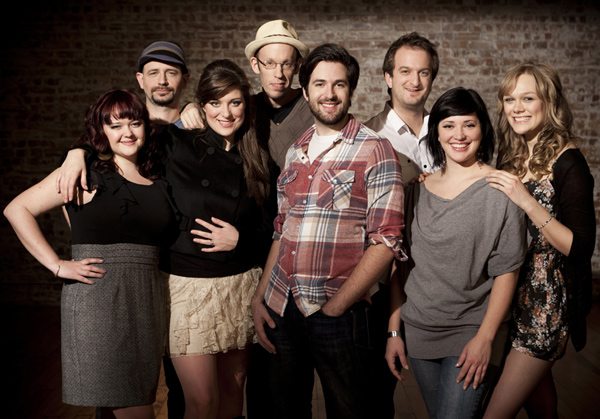 |
| The Swingle Singers |
Mahler: Adagietto
This is a well-known movement from Mahler, called the Adagietto. It seems so frustrated that it can’t make up
its mind to go anywhere.
Thursday, September 4, 2014
Show 108: Leftovers and Miscellaneous
[Added
on 2015/7/18: This used to be called Show 8. I've renumbered the
shows, so that this one is Show108. The July 4th show for this
year will be numbered numbered Show201, and so on. If you didn't figure
this out yet, my first show aired the week of July 4th, 2014.]
Part A (Approximately one hour) Part B (Approximately a gnother ghour.)
Part A (Approximately one hour) Part B (Approximately a gnother ghour.)
1
|
Introduction
|
This week, my plan was to do a little cleaning up, by which
I mean, play you some left-over tracks I could not squeeze into earlier
programs, and play you some additional tunes that you might be wondering
about.
|
2
|
Bach: Organ fugue in A minor, BWV 543
|
This is the tune that I use as a theme for the start of
the show. It is an organ fugue by
Johann Sebastian Bach, or J. S. Bach to people in the classical music racket,
to distinguish him from a couple of other Bachs,
whom very few people know about.
Around the nineteenth century, people began cataloging the
works of composers, for reasons of copyright, mostly, I believe. Anyway, a neat fellow called Schmeider, that’s like Schneider, except with an M, was
the one who took up Bach’s catalog, and he called it the Bach’s Werke Verzeichnis, which is
abbreviated to BWV. So this piece is
BWV 543, or sometimes just S 543, for Schmeider. Here is the fugue, played by Edward Power
Biggs, an organist from Britain, who came to the US just about the same time
as Virgil Fox, another famous organist.
Believe it or not, Biggs has the lightest registration of most Bach
performers, that is, he uses the lightest-sounding selection of pipes. This is in a slow 6-8 time, but it comes
across as triple time, like a minuet, or waltz. Just a really great piece.
|
3
|
Bach: Jesu bleibet
meine Freude
|
This chorale, from BWV 147, cantata 147, is very often the
first piece that young people latch onto.
I love it dearly, and when I played a MIDI version of it on the air,
my wife was very indignant, and she said, why not play the real thing? So here is the real thing.
The basic chorale is was not composed for this cantata; it
was an existing hymn. This is how it
sounds as it was sung in churches in Bach’s area.
|
4
|
Pachelbel: Canon in D
|
Pachelbel’s Kanon, which was
played a couple of weeks ago by a string quartet, is for three violins and
cello. Because violins usually sound
so alike, and when you have an entire string orchestra playing together, the
first violins sound pretty much like the second violins. So, I wrote it out in MIDI, so that it
could be played by four entirely
different instruments! I chose a
viola, a flute, a bassoon, and the Cello.
The bassoon plays an octave lower, which makes it sound really weird.
|
5
|
Beethoven: Symphony No 5 in C minor
|
We had a little bit of the famous Beethoven 5th
Symphony. Here’s the whole thing.
|
7
|
Mystery Haydnesque
Tune
|
Some of you might have wondered about that little tune
that I use during the station break, and at the end. It is a tune that I heard somewhere
when I was a kid, and I always thought it was by Haydn, Joseph Haydn, who
wrote lots of tunes like that. He was
in fact credited with writing a lot of short tunes that he did not write.
I first made a video of this basic tune, and put it up on
YouTube a few years ago, and called for any information on its composer, but
nobody responded. I first played the tune as
it was put up, once repeated.
Earlier this year (2014) I took this tune, and made a little
fantasia out of it, that is, an extended version around the basic tune.
|
8
|
Mozart: Symphony No 40 in G minor
|
For Mozart, also, someone cataloged his works after he
died. The cataloger’s name begins with
the letter K, so we give the catalog, or opus, numbers, as K whatever. Here is the first movement from Mozart’s
opus K 550, which is the famous G minor symphony No 40, from which we played
a minuet a few weeks ago.
|
9
|
Sock!Fight : Green Cats and Blue Licorice
|
Uma, a long-time resident of Williamsport, who went to
Lycoming, and whose band Episodes
is no longer together, has a new band, Sock!Fight, and this is one of
their songs:
|
10
|
New Broad River Band: Blue Bedbugs Bite
|
|
11
|
The National Anthem of EU
|
One of the most wonderful national anthems that I had
ready to play was the Anthem of the European Community. You know it well!
|
12
|
Brahms: Symphony No. 1, Finale
|
Here is the last movement of Johannes Brahms’s Symphony
number 1. Anyone who has attended
Lycoming College will know why this one is interesting!
|
13
|
Sousa: Liberty Bell march
|
This is Sousa’s Liberty Bell March. How amazing that anyone can write so many
highly memorable marches! If you
listen closely, there is a bell ringing in the second part.
The march is in binary form: AABB. This is played by the Philip Jones Brass
Ensemble.
|
14
|
Harry Belafonte: Hold ‘Im
Joe
|
This song, by Harry Belafonte, is about a donkey: Hold ‘em Joe.
|
16
|
Wagner: Overture to Die Meistersinger
|
Here is the first part of the Overture to Die
Meistersinger. I’ve already played the
last part for you. I fade it out when
he starts noodling in the middle, before it goes into the big ending.
|
17
|
Dvorak/Kreisler: Hungarian Dance No 2
|
This one was left over from the episode where I played a
lot of Kreisler miniatures. The
original tune was by Dvorak, and this arrangement is largely by
Kreisler. Here it’s played by Itzhak Perlman and Samuel Sanders.
|
18
|
Haydn: Benedictus from Nelson Mass
|
This movement from the Nelson Mass, for all four soloists
and chorus, is based on the line from the communion service that goes: “Blessed
is he that cometh in the name of the Lord ...”
One of the loveliest moments in the number is about
halfway through, when the alto starts off with Benedictus, and soon afterwards,
the Bass enters a note higher, then the Tenor soloist a note higher, and
finally the Soprano soloist a note yet higher. Very effective.
|
19
|
Kreisler: Liebesfreud
|
Liebesfreud
means Love’s Joy. This is one of Kreisler’s best-known
compositions, and a frequently requested concert piece.
|
21
|
Dvorak: Songs my mother taught me
|
Perlman plays Dvorak’s well-known song: Songs my Mother
Taught Me, probably based on a folk tune.
|
22
|
Boris Fomin: Those were
the days
|
Mary Hopkin was one of the earliest singers on the Apple
label, and Those were the Days was her first big hit with the label.
|
24
|
Saint-Saens: Pianists, from Carnival of the Animals
|
Saint-Saens pokes fun at pianists. Narrated by Leonard Bernstein.
|
25
|
Flanders and Swann:
Mopy Dick, the Whale
|
Flanders and Swann describe the troubles of a whale with
the Flu.
|
26
|
Bach: Contrapunctus
1 from Art of Fugue
|
This next piece is one of the loveliest pieces of music
ever written, but it was, correctly, regarded as an exhibition piece, an
intellectual exercise. One of the last
pieces Bach published, and it was posthumous, is a collection called The Art
of Fugue, and this one is the first one in the collection, and introduces the
main musical theme of the entire collection.
Every piece in it has this theme somewhere buried inside it, so you
can see what sort of exercise this was.
Contrary to popular belief, scholars are now certain that Bach started
work on this collection twenty years earlier, but I don’t think anyone is
absolutely certain. Here’s Contrapunctus 1.
|
27
|
The New Broad River Band:
Seven Generations |
This song, recorded in the studio by the New Broad River
Band, sung by David Pinelli, deplores the fact that
fracking is overrunning a lot of the Susquehanna Valley. Sometimes a landowner has little choice,
because if your neighbor deals with the gas drilling companies, they can siphon
out the gas under your own property.
Gas is a fluid, remember, and could flow along the shale layer. So your neighbor can get rich by selling
the gas that’s under your property.
Anyway, on the one hand, drilling for gas, while it ruins the
infrastructure of a region during the drilling phase, once the wells begin to
produce, it simply postpones the development of energy sources other than
fossil-fuels. But gas, as a fuel,
quite apart from the pollution of the wells, pollutes the air a lot less than
coal. Billtown
buses are now many of them powered by gas, and that’s a good thing, at least
temporarily. A lot less diesel fumes
around the city.
|
28
|
Beethoven: Pastoral Symphony, Movt 2 – At the Brook
|
Beethoven was a nature lover, did you know? The Pastoral Symphony, No 6 in F major, is
all about the countryside, and his perception of the rural folk, doing their
rural, rustic, bucolic thing, quite unlike our own rural folk, who are very
hip. This is a long movement, about hanging out near the creek, and I’m only
going to play a few minutes for you.
Remember, this is the favorite movement of a lot of people of your
grandparents’ generation. At the
Brook.
|
29
|
Free born man
|
Just in case I left you with the impression that The New
Broad River Band did not play any fun songs, here’s one, in which the banjo
player, called Judo Aaron Allison takes the lead. The other members of the band are: Clyde
Canton, alias David Pinelli (vocals and guitar),
Miss Monique Pinelli, (Vocals and string bass), and
Julian Pinelli on Fiddle. A Free Born Man.
|
Wednesday, August 27, 2014
Show 107: Animals in Music!
 [Added
on 2015/7/18: This used to be called Show 7. I've renumbered the
shows, so that this one is Show107. The July 4th show for this
year will be numbered numbered Show201, and so on. If you didn't figure
this out yet, my first show aired the week of July 4th, 2014.]
[Added
on 2015/7/18: This used to be called Show 7. I've renumbered the
shows, so that this one is Show107. The July 4th show for this
year will be numbered numbered Show201, and so on. If you didn't figure
this out yet, my first show aired the week of July 4th, 2014.] This show was about animals, pieces of music that refer to animals.
Prokofiev: Peter and the Wolf
|
The best-known classical piece for kids is Sergei Prokofiev’s Soviet
era story of Peter and the Wolf. Here
Leonard Bernstein narrates, and conducts.
|
Bach / Brian Slawson: Das Roach
|
Two-part Invention in A minor, No 13 by J. S. Bach, jazzed-up by
Brian Slawson, and performed on percussion. The title is, I believe, a sly reference to a song well-known in the Sixties called La Cucaracha, the Cockroach.
|
Saint Saens: Carnival of the Animals
|
This performance is narrated by Leonard Bernstein, who introduces the
movements. However, his forces are the
strings of the New York Philharmonic, two pianos, and several young special
soloists. For some of the pieces, I
used performances by Eugene Ormandy, and a very small chamber orchestra,
which seemed more appropriate, in particular the Donkeys, or People with Long
Ears.
Note: the famous Swan movement, written for Cello, is played on a
double bass!
|
Introduction and Royal March Of The Lion, Cocks and hens, Tortoises, Elephants,
Kangaroos, Aquarium, People with Long Ears, Cuckoo in the heart of the Woods,
Aviary, Fossils, The swan, Finale
|
|
Poulenc, de Brunhoff:
Babar the Little Elephant Meets the Old Lady |
This is a book in French by Jean De Brunhoff,
a French author, which was set to music by Francis Poulenc. It is narrated here by Jan Bookspan, and
performed by a special orchestra.
|
Beatles: Hey Bulldog
|
A relatively little-known piece by The Beatles, which was included in
the recent re-release of the soundtrack of Yellow Submarine
|
Sibelius: The Swan of Tuonela
|
A beautiful piece by Jean Sibelius
|
Flanders & Swann: The Gnu Song, The Sea horse, The Hippopotamus
Song
|
A few animal-related songs by Michael Flanders and Donald Swann, from
The Bestiary of Flanders and Swann.
|
Leroy Anderson: Waltzing Cat
|
Leroy Anderson (of Sleigh Ride fame) wrote this piece for the Boston
Pops. This performance is by a Czech orchestra.
|
Canteloube: Le Coucou
|
Dawn Upshaw performs this song based on a folk song of the Auvergne
region in France.
|
Beatles: I Am The Walrus
|
John Lennon’s famous nonsense song.
|
John Denver: The Eagle and the
Hawk
|
An amazing song sung in John Denver’s highest register.
|
Stravinsky: The Firebird
|
The Firebird arrives in a garden, chased by Ivan.
|
Rautavaara: Cantus Arcticus
|
A piece by Finnish composer Einojuhani Rautavaara,
which uses actual taped birdsong.
|
Subscribe to:
Posts (Atom)