Monday, April 19, 2021

My Mother


Today is the birthday of my mother!

It may not seem appropriate that this description of my mother should be put here, on the musical blog, rather than over on the all-purpose "I Could Be Wrong" blog, but bear with me!

My mom was the second of four siblings: one boy, the eldest, followed by three girls.  I was told a lot about my mother in her girlhood days, which I quickly forgot.  She didn't seem such an exciting subject back then.  But I do get the impression that she listened.  She absorbed everything she was taught in school.  She absorbed everything she was taught in numerous clubs, in school.  She absorbed and retained everything she was taught by her father, who was a physician and a surgeon.

She was also very much into sports, and was the sports captain of her school.  (They had one sports captain for the entire school, as well as individual captains for each team sport.  Don't ask me why.)

She was accepted by the YWCA for training as an administrative secretary. (Back then, the YWCA was the conduit of a vast amount of support for working women, as well as abandoned women and families, and so the administrative secretary---who essentially ran the YWCA office---needed to have training, unlike the president of each YWCA, who was elected, and often changed from year to year.)  The YWCA decided to send my mom to college, at a time when most women went straight into the workforce (or got married) without bothering with college.

After working for the 'Y' for several years, my mother took up teaching, and then met my dad, and they got married.  My mom continued to teach while I was still on the way, took a brief leave of absence (while she delivered me,) and then resumed teaching.  She taught English, history, geography and civics.  For various reasons, she decided to teach singing as well.  (Most of her students were learning English as a second language, and the singing helped these kids to lose their discomfort in pronouncing English words.)

She continued to teach for twenty years, until she retired.  Even then, she did not stop teaching.  When I was about 13, I started taking music and piano lessons, whereas many kids took piano when they were a lot younger.  Anyway, I was in boarding school, which meant that when I went home for the holidays and reported what was going on with me to my mom, it was more interesting to her, than if I had reported it daily.  When she learned that I was learning simple harmony, she revealed that she too had been taking lessons in advanced harmony from a friend.  Pretty soon she was teaching me advanced harmony, which fact I had to carefully conceal from my music teacher, who would have otherwise gotten mad.  (The last thing a teacher wants to hear is that she's getting upstaged by a competing teacher somewhere else!)

My mom's musical friend, meanwhile, taught music theory at three schools.  When she and her husband decided to take a year-long vacation to Australia, she arranged for Mom to substitute for her as music teacher at those schools, which supplemented our family income nicely!

My mother was very much into music and drama.  My father's job involved being transferred from one location to the other all through our lives.  At every place where we were posted, my mom got involved in the local musical and dramatic scene.  She sang at weddings, and she trained choirs, and directed plays.  My most treasured memories were of my mom practicing choruses from Messiah, or The Creation, or the St. Matthew Passion, and other major choral works.  So my mother was responsible for about a third of my knowledge of music theory, while three other ladies were responsible for all the rest of what I know about music, and a couple of gentlemen as well.

Despite the very public role my mother played in most places where we lived, including as a teacher, she was a very soft-spoken woman.  I realized only recently just how soft-spoken she was.  Even my father was moderately soft-spoken.  (I, in contrast, tend to yell.)

After my father also retired, they both retrained as psychologists and counselors, a move that is difficult for me to understand.  By all accounts, my mother was considered a very capable counselor, though my father gave it up rather quickly.

My parents died several years ago.  We miss them greatly; it is difficult to describe what it is like when your parents are gone, even if the parents concerned are in ill-health, and advanced in years.  You do get accustomed to it after a while, but every once in a while there is something you want to run by them, but of course, they aren't there.  Of course, there are your siblings, who are a good substitute, in a limited way.

Happy birthday, Mom!

Monday, March 22, 2021

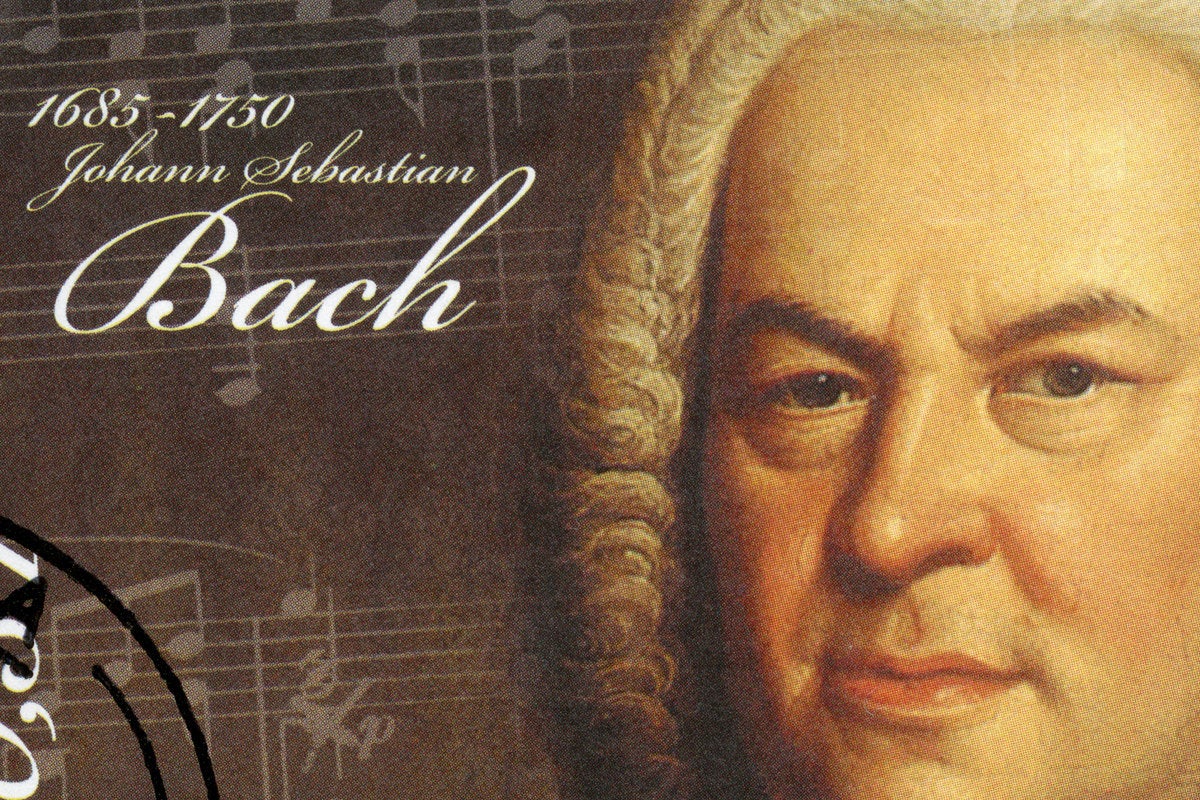
Johann Sebastian Bach


March 21st of each year is the date on which I celebrate the birthday of J. S. Bach.  For those who are interested, a curious set of circumstances arranged that for many years, while the Vatican decreed that the Catholic world must adopt the Gregorian Calendar, Bach was born in a region where the dates were different, and so there is some disagreement about exactly when we should celebrate Bach's birthday.  In the past, I have tried to describe in greater detail the calendric details of the problem, but this year I will focus on the composer himself.

Johann Sebastian Bach's family contained a large number of musicians.  It also contained a large number of individuals named Johann, in fact almost every eldest boy in the family bore that as his first name.  In family conversations, our favorite composer was known as Sebastian, for that reason.

After the death of Bach in 1750--a date that is used also as the date of the death of Baroque Music--it became necessary to catalog Bach's enormous output, and this huge job was taken up by one Wolfgang Schmeider.  Rather than number Bach's works chronologically (so that his first composition was numbered Opus 1), Schmeider numbered Bach's work structurally (according to genre); that is, all the cantatas were numbered 1 through 200 or so, after which came the motets, then the masses, then the passions, and so on.

Most of Bach's most popular works--at least his best known works--have the property that they sound very ordinary, but skillfully composed.  This is probably because Bach was such a consistent and logical composer (don't ask me what I mean by logical) that it became reasonable to create a system whereby anyone who wanted to write harmony that sounded correct could do so, following certain rules and principles.  In a sense, modern harmony is harmony according to Bach.  Even Beethoven, Brahms, and many of the romantic composers write Bachian harmony, except when they needed to stretch those principles in order to be more expressive, according to romantic musical needs.  Many great composers referred to Bach as the father of them all, sometimes with adoration, and often with frustration.

Musical Journalism
In the time of Bach, composers were expected--required--to compose new music for every occasion: birthdays, funerals, marriages, and even for each Sunday.  So composers were not expressing their deepest feelings in each composition, but rather delivering music for a deadline.  (In spite of this situation, many or most of Bach's pieces stand up well against the most inspired compositions of other composers, though Bach tended to wish that he had the leisure to write music that was truly his personal expression.)

Bach very often recycled his non-church music into music for church (but seldom or never the other way).  The amazing B minor Mass, which contains movement after amazing movement of gorgeous music, contains a great deal of material borrowed from other Bach cantatas or concertos.  This procedure is called parody composition.  

The Gloria of the B minor mass is a particularly grand movement.  Bach was an extremely religious person, almost to the extent that he was defined by his beliefs.  In another man, this could have been seen as a failing, but the teachings of Jesus expressed his world-view so well simply because he explored them in such detail.  More than half the volume of Bach's musical composition was in his 200+ cantatas, and the ideas in them--even if formulaic to us in the 21st century--covered a wide gamut of religious thought for his times.  Furthermore, these cantatas are only the ones that have survived; when I surmise that Schmeider began his cataloging process in 1942, possible 2/3rds of Bach's Cantatas were already lost.

Secular Compositions
Bach had several sons, almost all of whom were musicians.  (We know little about his daughters; which is not unexpected from a time when the achievements of women were considered insignificant.  We do know that one of his daughters was married to a man named Agricola, who served as an assistant to Bach in his later years.)  One of the reasons that Bach's sons were important is that when Bach moved to Leipzig--a city of great significance to music, since Telemann, Mendelssohn, Schumann and Wagner all lived and worked there--he found himself in charge of the musical activities of the famous Zimmerman's Cafe.  The musical evenings of this venue had become famous, and Bach was happy to take up the directorship of the music, because it afforded an opportunity to display the talents of his musical sons, who were capable keyboardists.  Bach wrote many concertos to be performed in this place, including rewrites of existing concertos for violin and oboe and so on.  We are fortunate indeed for this set of circumstances, because the music of many of those concertos for oboe, etc. are now lost, but the music for the keyboard versions remain.  The history of Zimmermann Kaffeehaus is interesting.  These concertos, as well as the concertos Bach wrote as calling-cards for various German nobles, are the closest things to Symphonies that Bach wrote, except perhaps for his set of four Ouvertures, which are dance suites after the model of music composed for the French kings in Versailles.

Academic Compositions
Bach had his theoretical side, which led him to compose sets of pieces in the most common keys; for instance his two-part inventions.  There are 15 of these, in the keys of C major, C minor, D major and minor, E Flat major, E major and minor, F major and minor, G major and minor, A major and minor, B Flat major, and B minor.

You might wonder whether the keys that are omited have to do with the difficulty of the key-signatures.  You would not be exactly right; these keys were the conventional ones in which sets were written (yes, other composers also wrote sets of works), but the problem was with tuning.  In Bach's past, instruments were tuned in such a way that two notes a perfect fifth apart, for instance, had frequencies in the ratio of 2:3, and which therefore sounded smooth when played together.  But by Bach's time, the ears of people had become accustomed to a little roughness in the sounds of chords, and it was possible to play music in quite distant keys; in fact all these 15 keys.  Bach, in later years, devised a tuning system, or developed an existing system, using which it was possible to write pieces in all twelve keys.  Some writers believe that Bach's tuning was that of Equal Temperament, which is the tuning we have today, in which none of the fifths are perfect.  Others believe it was a very creative compromise in which some fifths, and some thirds were in integer ratios, and did sound smooth.  The set is the famous 48 preludes and fugues for keyboard, called The Well-Tempered Clavier.  They are by no means merely academic works; almost every one is a masterpiece.  Many experts agree that they were intended to be played on a clavichord, an interesting type of keyboard instrument that is very rare today, and was probably not common in Bach's day either.  But the compositions are titled as for the keyboard.

There are also a set of 15 Three Part Inventions, or Sinfonias; 6 Trio Sonatas for Organ, a set of 21 organ preludes and fugues (or sometimes fantasia and fugue), a set of 6 concertos for ensembles ranging from large to small--the Brandenburg Concertos; and a set of fugues, The Art of Fugue.  The last is emerging as a compilation of fugues Bach wrote throughout his lifetime, based upon a particular subject, and not a final project he undertook in his declining years.  These sets were intended to be instructional, to give examples of the possibilities within a particular form.

While the large-scale pieces of Bach are beautiful, the small-scale pieces are beautifully intimate as well, and display Bach's counterpoint well.  Counterpoint is the art of combining different melodies concurrently together.  Listeners new to this device find it confusing at first to hear every part seemingly going its own way.  Eventually, though, the different melodies seem logical and right, and it is possible to hear the melodies in the lower voices as adding texture, so that it is possible to ignore them as melodies, and to know that they are present, and to feel that their presence is welcome.  A particular instance of counterpoint is Imitation, where a lower voice imitates a melodic fragment from a higher voice.  Contrapuntal imitation is practiced by composers even today.

Thursday, December 24, 2020

Christmas Music! How to use a playlist on Flash Media

A big problem for me—as you can easily imagine—is to have some quality music to listen to while I’m reading or writing!  On one hand, I know dozens of pieces of music, and I have hundreds of CDs, each of which will have a cut or two that will do.  But what I need is music for a few hours, so that I don’t have to get up and change the record.  So I’m surrounded by water, but not a drop to drink, as the saying goes.

I whined at my daughter, who stopped me abruptly, and said there were two videos on YouTube that would almost certainly hit the spot for me, and she sent me links to them:

https://www.youtube.com/watch?v=LE9Q4JN-Yek,

and

https://www.youtube.com/watch?v=myyAkYqykbs. 

Well, that would settle the whole issue, except for the fact that YouTube has peppered both videos with commercials!  So if you are more annoyed with commercials than you are starved for Christmas music, don’t put these on.  Instead of changing your records, you’re going to have to run to your device—phone, computer or tablet—and hit the “Skip Ads” link.

People have been making “Mix tapes” for centuries; collections of their favorite tunes to play on their portable tape recorders, until nobody had tapes anymore.  For those of you who are about my age, and whose tapes are about to quit, (and of course, those 8-track tapes have already quit long ago,) the latest thing is a Flash Drive.  This is a tiny gadget, one that also goes by the name of Thumb Drive, though it has absolutely nothing to do with Thumbs.  It is—well, I’m not going to tell you; it won’t help you at all—but it is something very much like a tape cassette; it stores “digital stuff”, or files.

Now, it isn't going to play it for you.  It is like a CD or a tape, not a tape player.  But if your receiver (which means radio) has a little socket that looks like a USB socket, the computer side of one, then chances are, if you insert the Flash Drive in there, your Receiver will play the music on your flash drive for you.  The things cost about $25, or even less.  There are also Flash Cards, which are the little cards like the ones that go into your phone.  (Note: don’t steal the one inside your phone; some of those phone memory cards contain all the phone numbers you need, etc.)  Some cameras also have these memory cards.  They're almost as good as a Flash Drive, except that you need to have a Receiver that has a slot for a memory card, or a Flash Reader that reads a Flash Card.  (Still, these Readers are not music players, unfortunately.  Luckily, your Radio is a Player, or could be.)

Something more likely to be a player is your DVD player.  My DVD player has a slot where you can slide in either a Flash Card, or a Flash Drive, and if the card or drive has music tracks, it plays them.  In fact, your TV set might turn itself on, and display a list of the tracks on the drive.  At the very least, it will display “Track 1, Track 2” and so on, for however many tracks are on the card or drive.

OK.  How are we supposed to get the music tracks onto the Flash Card or Flash Drive?  Let’s show you how to do it in the case where you don’t care what order the tracks are played in.  First, you have to “rip” these tracks into your computer from the CD that contains them.  Unless, of course, you bought them online from some Internet source such as Amazon, or Spotify, in which case they would have sold you these tracks, all ready to go, except of course, that they’re not on your Flashdrive (or card).

Plug your Flash device into your computer.  (The drive should show up on your Explorer.)  Use your mouse, and drag the files onto that drive; the system should tell you that the files were successfully copied to the Flashdrive or card.

Now, don't be in too much of a hurry to unplug your Flashdisk; there should be a little icon somewhere in a corner that alerts you to the fact that removable storage is connected to the computer.  It is usually in the lower right-hand corner.  Click on it, and it will ask whether you want to remove your Flashdisk.  Say yes, or just click on the question.  If the Flashdisk does not remain on the list, it has been disconnected, and you can pull it out.  (If you don't go through this rigmarole, you risk having some of your tracks not sent over, or having a broken track sent over.)

FINALLY, how to get these tracks played in some specific order you desire?  You need to make a playlist.  First you get the tracks installed on your Flashdisk as above.  Now you need to create a plain text file (I don't know exactly how plain text it has to be; I have only ever used Notepad, a legacy "App" from Windows, which only creates plain text.  (Plain text does not have italics, bold, or anything; you can create plaintext files in Word, for example, but it needs to be saved in a special way.  Ask your pre-schooler to help you.)

In the plaintext editor, write, in a single column, the names of the tracks in the order you wish them to be played.  The names have to be exactly as they are on the Explorer.  If any name is misspelled or altered in any way, that track will be skipped, and you will feel like a dolt.  Save the file with the name Playlist.m3u (assuming that all the music files you have put on your Flashdrive are in mp3 form), and put that (the playlist) too on the Flashdrive.  Now, when you slide your Flashdrive into your DVD player, it will (hopefully!) start playing the tracks listed on your playlist, in that order!  This is particularly useful in the case when you’re listening to an opera, or a favorite album, when the sequence of songs is familiar, and it would be disconcerting to have them playing in some random sequence.

Happy listening!

Arch

Monday, December 21, 2020

Messiah Sing-Along!

 The best Messiah Sing-Along I have heard this season is this one, from the Boston Haydn+Handel Society.

It is a distanced performance, with one instrument per part, and just a couple of singers per choir part.  (Or maybe just one.)  If you want to experience a really high-precision Messiah, appropriate to our pandemical circumstances, this one should serve, because it is on YouTube, and can be played on demand.

More later, after I finish watching, and trying to sing along!  (No, I haven't finished singing along.  They must be near the Shepherds' Scene...)

Arch

Thursday, December 3, 2020

Joys of the Holidays: Hansel and Gretel, by Engelbert Humperdinck


Hansel and Gretel
, the children’s opera by Engelbert Humperdinck (not the singer, but rather the 19th century composer) has been, for most of a century, a beloved fixture of the holiday season.  Unfortunately, the population that enjoyed children’s opera, or even opera of any sort, has been in decline, and the new generation of TV executives is probably unwilling to program anything that couldn’t go head-to-head with the SuperBowl, and so I suspect that Hansel und Gretel will probably only be scheduled at 2:00 AM on a Sunday night.  The libretto is by Adelheid Wette, the sister of Engelbert H.  (The premiere of the opera was conducted by Richard Strauss, well known as an excellent conductor.)

‘Hansel’ is an abbreviation of Johannes, a common old German name—Mozart’s first name, incidentally—and the el ending of the name is a characteristically South German variant of the diminutive, I’m given to understand.

Likewise, ‘Gretel’ is an Alpine diminutive of Margaret.  So that should settle any questions in anyone’s mind about how exotic these names were; this is a story about Peggy and Johnny, the kids next door.

Even though the story (from the Brothers Grimm) is well known all over the world, and certainly in Germany, what is amazing about this opera is the music.  Engelbert Humperdinck was a Wagnerian, which means that he had adopted Wagner’s brilliant idea (which Korngold, and John Williams, and other Hollywood composers also used) of referring to various ideas, feelings, and events, with a characteristic, memorable snippet of melody, or harmony, or both, called Leitmotifs.

The Overture is a conventional potpourri overture, which is the most sensible choice for a children’s opera; if kids hear a catchy tune right at the beginning, before any action takes place, they’re likely to remember that tunelet when it makes its formal entrance.  (A major problem to be solved for Wagnerian composers is: how to introduce a Leitmotif, and anchor it to the intended idea.)  The first tune in the overture is the hymn-like tune to which is sung the Children’s Prayer; a sort of “Now I lay me down to sleep” prayer in sung form.  Next is a fierce segment, depicting the Witch.  This is the violent aspect of the Witch, in contrast to the sneaky aspect of her! 

The Overture does contain fragments of all the important themes, but all adjusted to the needs of the overture, and not letting it degenerate into a mere catalog.  The evening prayer is its central melody, and ends up being a sort of anthem for the entire opera.  Next in importance is a jolly little tune that represents the playfulness and innocence of the two children.  Gretchen teaches her brother a little dance, and sings this little tune with the dance instructions.  These two tunes are the poster-boys for the entire opera, though neither of them, in my mind, have much to do with the plot.

The story is more elaborate than the basic one which English-speaking children learn; German versions of the story are typically a lot more elaborate.  Germans take their children a lot more seriously, based on their children's literature.

The story begins in the poor home of the children, and for reasons I cannot remember, the two kids find themselves in the woods, and unable to find their way back home.  Gretel—the older child, in the story—tries bravely to keep her brother’s mood cheerful (hence the little dance), and presently, they settle down to sleep, because it is getting dark and scary.

While they’re asleep, a whole ballet troupe of angels come and parade around them, to keep them safe through the night.  (A ballet sequence is common in most German operas.)

When they wake up in the morning, it becomes clear that the trail that Hansel believes he has laid down, to help them return home, has completely vanished.  The children are led further into the forest, until they stumble on the witch’s famous cottage.  The cottage, of course, is made of gingerbread and candy, and the hungry kids cannot help themselves, and pick off pieces of it to eat.  They hear a raucous voice from inside, calling: “Nibble, nibble mousie, nibbling at my housie!”  The kids are momentarily transfixed, and after much clever dialog, find themselves shut away in a little cage.

The rest of the story goes according to the conventional plan with the possible addition of a few hunters.  (One is led to speculate that the hunter lobby was strong in those times.)  The enormous ballet interlude lengthens the story by almost half an hour.  The kids return home, to find that all the financial tribulations have somehow been swept away, which is just as well, because they bring with them a score of formerly ensorcelled young people.  (As is well known, the death of a sorcerer releases all his or her spells.)

While Humperdinck was a serious musician, and his adherence to Wagnerian principles was serious, he keeps a careful eye on how palatable the melodies and the harmonies of this work are, to kids and their parents.  In the end, his efforts were well rewarded, though whether the man himself was rewarded I do not know; very little of his output is well known today.  H and G, though, deserves a century or two more of popularity.

Archie

Wednesday, October 7, 2020

Archie's Archives: A New(ish) Road!

As you might have noticed, putting up the shows from the WXPI radio program Archie's Archives has been put on the back burner for a while now.  But something interesting happened to me a few years ago, and my musical world is vibrating rather unhappily.

First of all, my CD player got quite badly sick.  The CD's started skipping grooves (hey, that sounds like a familiar phrase; did I blog on this already?  What did I say?)  So I asked around, and new CD players are very, very expensive.

One of my friends, though, said I should look into DAPs.  What are those, you might ask?  Well, they're adult versions of mp3 players; i.e., they are high resolution music players.  You get to "rip" your CD's into computer files, but they're are much higher quality than you were accustomed to getting on your old iPods, or whatever you used (I used a SanDisk Clip).  You can even rip your music at CD quality, but in smaller files.  The .wav files are not very convenient; at the moment, I am converting the music on my CDs into .flac files, which contain every bit of information on the CD.

Then, I bought two things: a pair of really good headphones--these were expensive, but incredibly more comfortable than the older ones I had; then I bought what was going to take the place of my mp3 player, namely a DAP, or Digital Audio Player.

I'm having trouble getting music into the DAP; I succeed sometimes, then the next time I try, it says that it is full, or it says that the first batch I uploaded has disappeared.  This sort of problem is not uncommon with flash memory--which is what the gadget has.

Meanwhile, the tracks I have on my old clunker SanDisk sound awesome on my new headphones!  So when I go for my daily walk around the few blocks near my home, I'm listening to heavenly music.  Actually, I have not only a pair of new headphones, but also a pair of sport clips, which stay on my ears a little more securely than the earbuds I used to have.  My wife insist that I wear these clips on my walk, for fear that I might get run over by some vehicle that I haven't heard sneaking up on me.

I'll give you more information as I acquire it.

Archie

Friday, May 29, 2020

Art of Fugue: Contrapunctus 1, J. S. Bach


J. S. Bach's The Art of the Fugue is often avoided as a listening experience by many listeners, fearing that this work--and any works with the term 'fugue' attached--will be too academic for the ears of laymen.  Bach would probably agree with me when I say that, if a fugue doesn't grab the listener as simply a piece of music, it should be considered a failure even as a fugue.

This first fugue: Contrapunctus 1, is probably one of the most approachable fugues ever written.  As with all the fugues in The Art of the Fugue, there is no indication as to what instruments are to play each line of music.  Some scholars consider that such pieces are meant to be played on the harpsichord or the organ; more modern scholars consider that a string ensemble is best suited for the job.  In this video, the parts have been assigned to--top to bottom--a flute, an English horn, a viola, and a bassoon, respectively.  (The tenor is doubled very softly by a marimba, to give it a little crunch.)


Archie